

An AI-written page can be grammatically clean, neatly organized, and almost completely interchangeable with the next business in the search results.
That is the editing problem worth solving. A prospective customer needs to understand your service, how it applies to their situation, and what happens if they contact you. A page full of confident adjectives may leave all three questions unanswered.
My approach is to give the draft a defined job, verify the claims, and add the knowledge that comes from actually delivering the service. Then edit the language and check the finished page.
If you are writing your own business website content with AI, the goal is a useful page your business can stand behind.
Table of contents
- Give the Page a Job Before Editing Its Sentences
- Check Whether a New Page Is Actually Needed
- Audit the Claims Before Polishing the Copy
- Replace General Claims with Useful Service Knowledge
- An Illustrative Before-and-After Content Edit
- Edit for Customer Questions and Search Intent
- Bring the Draft into Your Own Voice
- Use Examples Without Inventing Experience
- Check the Finished Page, Including Its Supporting Elements
- Use a Repeatable Editing Workflow
- Frequently Asked Questions About Editing AI-Written Content
Give the Page a Job Before Editing Its Sentences
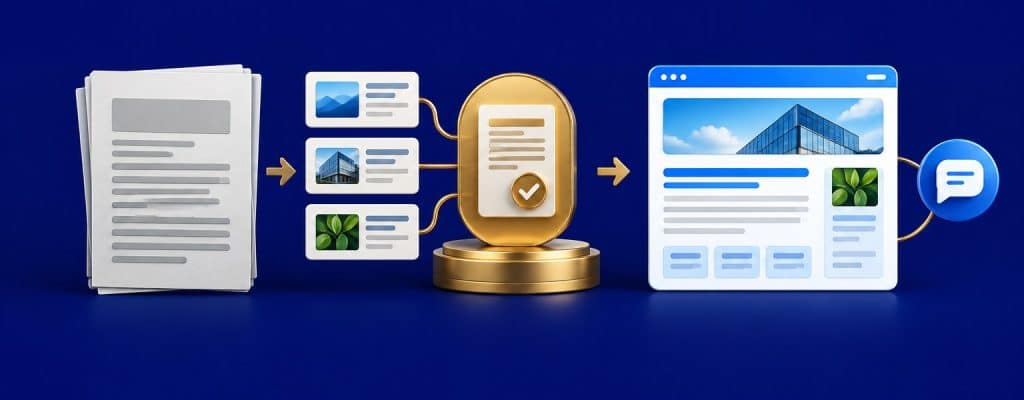
Decide who the page serves and what the reader needs to understand or do. A service page, a comparison guide, and a customer support article have different responsibilities.
For an illustrative example, imagine a small landscape company preparing a page about seasonal property cleanup. The intended reader wants to know whether the service fits their property, what an assessment involves, and how to request an estimate.
A draft that spends most of its space explaining the importance of attractive landscaping may be polished but poorly aligned with that purpose. Reorganize the material around the customer’s practical questions before spending time improving individual phrases.
Write a short content brief: audience, service, page purpose, approved facts, questions to answer, and appropriate next step. Keep the scope narrow enough that the page can do its job clearly.
Check Whether a New Page Is Actually Needed
Before drafting, review the website’s existing coverage. The topic may already belong on a service page or in a guide that can be improved.
Assign the draft an intended place in the website structure. Identify what makes it distinct, which pages should link to it, and where it should direct a reader who needs more detail.
If the draft repeats an existing page’s purpose, consider whether to improve the existing material instead. Our discussion of content consolidation versus content creation can help frame that choice.
Generating another draft does not create a customer need for another URL.
Audit the Claims Before Polishing the Copy
Read the draft for statements the business would be accountable for. Check services, areas served, qualifications, availability, warranties, pricing, and performance claims.
Separate what is verified from what needs confirmation. If the source material does not support a statement, remove it or turn it into a question for the appropriate person.
For the hypothetical landscape business, a draft might promise same-day visits or include services the company only provides under certain conditions. Those are operational decisions, even when they appear in a pleasant paragraph about customer care.
Google’s guidance on generative AI content emphasizes accuracy, relevance, and manual fact-checking. It applies that review to metadata and image descriptions as well as the main content.
Check cited sources yourself. A real link can be paired with a claim it does not support. Keep dates and limitations attached to facts that depend on a specific time or context.
Replace General Claims with Useful Service Knowledge
Ask the people who perform or manage the work what customers need to know. A short conversation can supply material that a generic draft lacks.
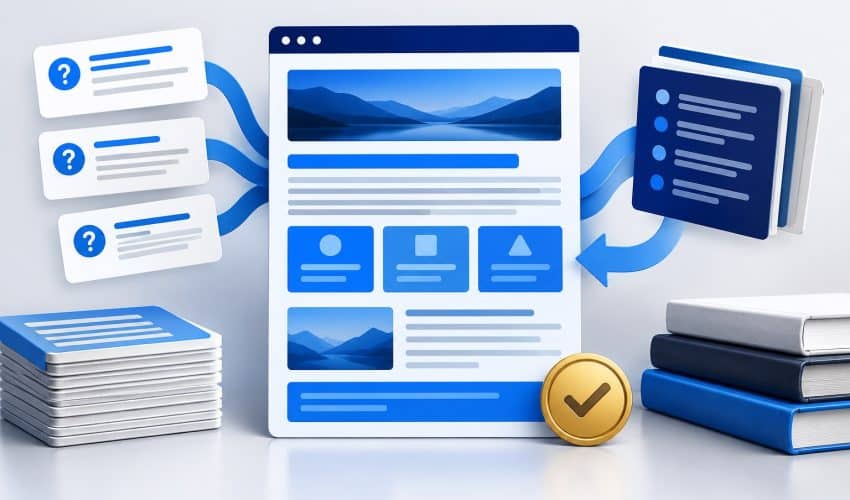
Useful questions include:
- What information do you need before providing an estimate?
- Which conditions change the scope of the work?
- What does the customer need to prepare?
- What is included, and what requires a separate discussion?
- Which misunderstandings come up repeatedly?
- What happens after the customer submits a request?
Use only the answers that are accurate for the business. AI can organize those notes, but it should not fill missing details with plausible procedures.
Google’s helpful-content guidance asks creators to consider usefulness, originality, and demonstrated expertise. Those are practical editing questions: does the page explain something valuable that your intended customer needs?
An Illustrative Before-and-After Content Edit
The examples below are invented to demonstrate an editing method. They describe no actual company, policy, or client result. Any similar wording used on a real website would need to match that business’s approved process.
Generic draft: “Our experienced team provides comprehensive seasonal cleanup solutions tailored to your needs. We use quality techniques to deliver exceptional results and complete satisfaction.”
The paragraph makes broad claims but leaves the service unclear. The reader still cannot tell how the work is assessed or how to get started.
More useful version, assuming the process has been verified: “Tell us the property location and the areas you want assessed when you request an estimate. We review access, the material to be removed, and any work that needs a separate scope. Your estimate identifies the agreed cleanup tasks before the visit is scheduled.”
The second version gives the customer practical information. It does not require stronger adjectives. It requires accurate knowledge of how the business works.
Not every paragraph needs process details. Apply the same principle to other sections: explain the relevant fact, condition, or decision instead of repeatedly asserting quality.
Edit for Customer Questions and Search Intent
Search intent means what the person is trying to accomplish. Review whether the page serves that need, especially if the draft was generated from a broad keyword prompt.
Someone looking for a local service may need availability, scope, proof of capability, and a clear way to inquire. Someone researching whether a service is necessary may need a balanced explanation and practical decision factors.
Use the primary topic naturally in the title, headings, and explanations where appropriate. Avoid inserting the same phrase into every section to satisfy a counter.
Our explanation of keywords, entities, and topics provides context for maintaining a clear subject while answering related questions. Keep the language understandable to the intended reader.
Review FAQs with the same standard. Add questions that resolve useful uncertainties rather than repeating section headings as questions.
Bring the Draft into Your Own Voice
Read the page aloud. Identify phrases you would never use with a customer, repeated conclusions, vague promises, and paragraphs that take too long to reach the useful point.
Use the terminology your business and customers understand. Define unfamiliar terms when they help the reader, and remove jargon that adds no practical meaning.
Give AI a small sample of approved writing and ask it to identify concrete style features, such as direct explanations, developed paragraphs, or restrained humor. Then ask it to revise while preserving verified facts and the page’s purpose.
Review the result yourself. A style match matters only if the content stays accurate and helpful. Adding conversational filler does not turn a weak explanation into expertise.
Use Examples Without Inventing Experience
Examples can explain a service decision more clearly than another abstract paragraph. Be explicit about whether you are describing a documented project, a general scenario, or a hypothetical situation.
If you use a real project, confirm the facts and any permissions required. Preserve relevant limitations and timeframes. Removing the company name does not make an unsupported result suitable for publication.
If you use a hypothetical example, label it and avoid implying that the outcome occurred. It can still help a reader understand how scope, access, timing, or customer needs affect a decision.
The same applies to images. A generated visual can illustrate an idea, but don’t present it as a photograph documenting work your team performed.
Check the Finished Page, Including Its Supporting Elements
The final review belongs on the implemented page as well as in the document. Formatting, links, and contact options can change during publishing.

| Element | What to verify |
|---|---|
| Title and headings | They accurately describe the topic and provide a clear reading order. |
| Service claims | They match approved facts, conditions, and actual availability. |
| Images and descriptions | They support the content and describe what is shown accurately. |
| Internal links | They reach relevant pages and help the reader continue. |
| Metadata | The title and description accurately represent the page. |
| Contact path | The next step works on mobile and reaches the right destination. |
If the page uses structured data, check that it represents the visible content accurately. Publishing markup does not correct a misleading claim in the copy.
Assign someone to approve factual content and someone qualified to verify any unfamiliar technical changes. One person may handle both when appropriate, but responsibility should be clear.
Use a Repeatable Editing Workflow
Move through the work in a consistent order: confirm the page purpose, review existing coverage, check claims, add useful expertise, edit the language, and verify implementation.
Allow time for the review rather than committing to a production volume your business cannot check responsibly. Keep a record of the main sources, reviewer, and meaningful changes.
After publication, observe relevant discovery, page activity, and qualified inquiries where measurement allows. A cleaner draft does not guarantee more search visibility or sales. Use the evidence to decide what needs further improvement.
If you are unsure whether the draft serves a useful purpose or how it fits the wider website, our DIY SEO and GEO consulting can help you review the approach while your team handles the work.
Frequently Asked Questions About Editing AI-Written Content
How much of an AI draft do I need to rewrite?
There is no useful universal percentage. Keep accurate, clear material that serves the page’s purpose. Revise or remove unsupported claims, repetition, missing explanations, and language that does not fit your business.
Should I use an AI detector before publishing?
A detector score does not establish whether the page is accurate, useful, or appropriate for your customers. Base your editorial decision on the content, sources, business facts, and review process, not on treating a score as approval.
Can I ask AI to invent an example if I label it hypothetical?
You can use an illustrative scenario when it is clearly labeled and responsibly reviewed. Make sure it does not introduce misleading technical advice or appear to document a real customer result.
What if the draft sounds good but I cannot verify its claims?
Remove the claims or obtain reliable information from the appropriate source before publishing. Rewording a statement more confidently does not solve the evidence gap.
Who should approve a page when an employee uses AI to write it?
Assign approval to someone who can verify the business facts and evaluate whether the page helps the intended customer. Add specialist review when the content or implementation requires expertise beyond that person’s role.
Get an Experienced Review of Your AI-Assisted Content
Elite SEO Consulting can help you evaluate content priorities, review page purpose, and identify gaps that prevent a draft from becoming useful business content.
Bring your draft, the intended audience, and the questions you want the page to answer. We can discuss a focused review to support your writing and implementation.
Call 719-474-9404 or request a consultation to discuss your AI-assisted website content.


