A customer can find your downtown business in Google and still choose somebody else. The phone number is hard to find, the booking page is confusing, the menu is outdated, or the entrance information leaves them guessing.
That gap between being visible and winning the visit costs you money.
Downtown Colorado Springs SEO should support the action your business needs: a qualified call, a confirmed appointment, a reservation, a purchase, or a visit. Ranking improvements matter, but customers still need a clear reason and a workable way to choose you.
Table of contents
- How Can Downtown Colorado Springs Businesses Turn Searches Into Customers?
- Decide Which Customer Action Matters Most
- Make the Google Business Profile and Website Agree
- Remove the Friction From Calls
- Make Appointment Requests Clear and Dependable
- Help Customers Complete the Visit
- Use Evidence That Supports the Action You Want
- Audit Three Customer Tasks on a Phone
- Measure Progress Without Counting the Same Customer Three Times
- Downtown Colorado Springs SEO FAQs
- Make the Next Customer Action Easier
How Can Downtown Colorado Springs Businesses Turn Searches Into Customers?
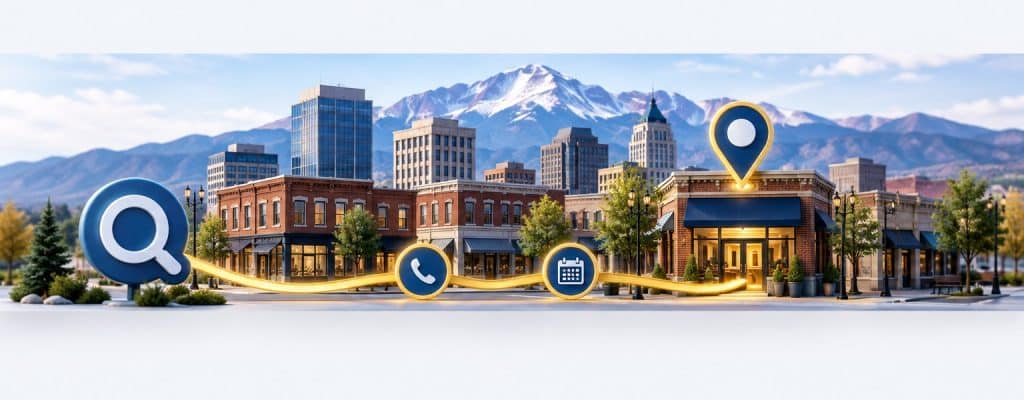
Match valuable searches with useful pages, keep Google Business Profile information accurate, and give customers a clear next step. Then test the call, booking, or visit experience on a phone and connect those actions with business records. Fix obstacles between discovery and the customer’s intended action before investing in more traffic.
Our Colorado Springs SEO services combine search visibility, website content, and conversion improvements into one plan.
Decide Which Customer Action Matters Most

Visit Colorado Springs highlights downtown’s shops, restaurants, cafés, and arts offerings. A useful marketing plan recognizes that those businesses, along with appointment and professional-service firms, do not all need visitors to do the same thing.
Choose the primary action for each important page. Keep other useful contact options available, but make the intended next step easy to recognize.
| Business or offer | Primary customer action | What to measure beyond the initial click |
|---|---|---|
| Appointment-based service. | Book an appointment or request availability. | Confirmed bookings, attendance, and resulting business. |
| Professional consultation. | Call or request a consultation. | Relevant inquiries, consultations held, and clients acquired. |
| Restaurant taking reservations. | View the menu and reserve. | Confirmed reservations and completed visits where reliably recorded. |
| Retail storefront. | Check the offer, contact the shop, or plan a visit. | Product inquiries, customer-reported sources, and sales. |
These are planning examples, not claims that every business in a category needs the same setup. A restaurant that doesn’t take reservations needs a different action than one that does. A retailer with online checkout may need to prioritize product purchases.
Give Each Search a Useful Landing Page
The page a customer reaches should continue the task that brought them there. A search for a specific appointment service needs service information. A person checking your hours needs current hours and location details.
Review your key search themes and the pages that receive those visitors. Ask whether each destination answers the question and offers the appropriate next step. Avoid sending every visitor through an extra page just to reach the information they requested.
A homepage can be the right destination for a single-location business. A detailed service, menu, booking, or product page may be better for a more specific query. Choose the page based on the customer’s task, not a rule that every search must land on the homepage.
Our Broadmoor-area guide to matching service pages with customer searches provides a useful page-planning process. The same principle applies downtown: organize content around real buying needs rather than producing separate pages for every keyword variation.
Make the Google Business Profile and Website Agree
Customers should not encounter two different versions of your business depending on where they look. Review your profile and website together, especially after changes in hours, location, services, or booking systems.
Check the name, address, map pin, phone number, hours, category, and website destination. Add supported booking or menu links where they apply, and verify that each leads to the correct current page.
Google’s local ranking guidance identifies relevance, distance, and prominence as key factors. Accurate information helps Google and customers understand the business. It also reduces the chance of somebody arriving when you are closed or trying a disconnected number.
Use original photos to show the actual entrance and experience. A photograph of the correct doorway can answer a practical question that another stock image cannot.
For a fuller configuration review, use our Colorado Springs Google Business Profile guide.
Remove the Friction From Calls
If a call is the right next step, make the phone number easy to find and tap. State accurate hours and explain what customers should do when the team is unavailable.
Then test what happens after tapping. Does the call reach the right line? Can the person answering handle the relevant service? Is voicemail useful? Who follows up on missed calls?
A consultation page should briefly explain who the service is for and what the initial call covers. That helps appropriate prospects contact you with a clear purpose. It can also reduce inquiries for work the company does not handle.
Record actual call outcomes where your systems support them. A phone-button click shows intent to contact; it doesn’t prove the call connected, qualified, or produced a customer.
If the inquiry needs further handling, our guide to lead response and follow-up explains why post-conversion work belongs in the marketing discussion.
Make Appointment Requests Clear and Dependable
An appointment page needs more than a calendar. The customer should understand what they are requesting, whether the time is confirmed, and what happens next.
Explain the service, relevant eligibility or scope requirements where appropriate, appointment location or format, and any accurate preparation instructions. Collect only the information needed for booking.
Test the process on a phone, including the confirmation email or message. Make it clear whether the customer has a confirmed appointment or has submitted a request that staff must approve.
For a hypothetical consultation business, a useful flow might be: choose the service, select or request a time, provide basic contact details, and receive an accurate confirmation. If staff approval is required, say that before the visitor assumes the booking is complete.
Keep unnecessary personal or sensitive information out of a basic inquiry form. Use the appropriate established process when a service requires it.
Help Customers Complete the Visit
Location details matter most when somebody is nearly ready to arrive. Make the address, entrance, suite or floor where applicable, and business hours easy to find.
Verify parking and access information before publishing it. Distinguish spaces the business controls from public options. Rather than copying parking prices that may change, link to the City of Colorado Springs parking information when that helps visitors plan.
If temporary access changes affect your entrance, explain the current route with a clear date and keep the notice up. Do not leave a closure message looking current after the issue is resolved.
Businesses that need customers to plan ahead can also use our Old Colorado City guide to reaching customers before a visit. The geography differs, but accurate information and a clear visit plan remain useful.
Use Evidence That Supports the Action You Want
The evidence on a page should help the customer decide. A service description needs relevant work or qualifications. A storefront benefits from original photographs and clear offer information. An appointment business needs a credible explanation of the service and provider.
Use genuine customer feedback responsibly. Ask consistently for honest reviews and follow Google’s review policies, including its rules against incentives and selectively soliciting positive reviews.
A claim should match its evidence. Do not present an unrelated case study as a downtown campaign or use a broad testimonial to imply a result for a specific service. Helpful proof makes the decision clearer without asking the customer to infer more than the evidence supports.
Audit Three Customer Tasks on a Phone
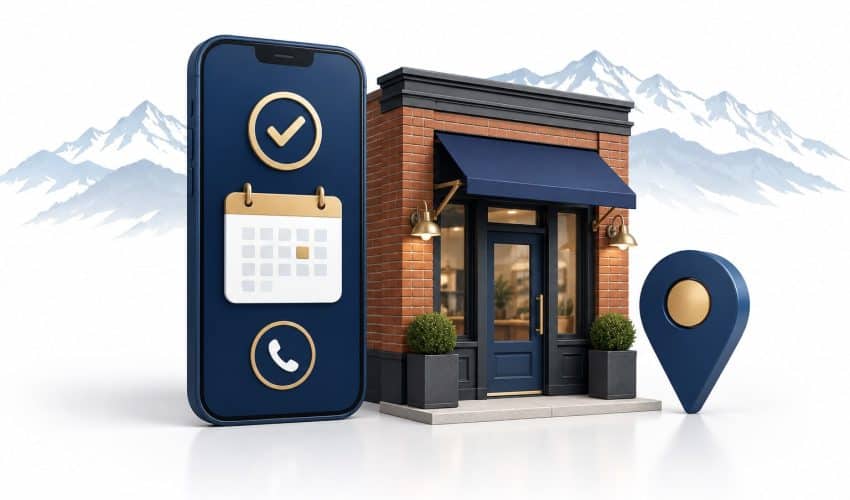
Before adding another article or increasing promotion, run a short customer-experience check. Use the same pages and links a prospective customer would encounter.
Task 1: Contact the Business About the Right Offer
Start on an important service or offer page. Find the phone number or inquiry form, complete the action, and check where the inquiry goes. Verify that the confirmation sets an accurate expectation.
Task 2: Arrange an Appointment or Next Step
Where booking applies, follow the process through confirmation. Otherwise, test the estimate or consultation request. Note every unclear choice, unexpected account requirement, broken link, or instruction that could stop a suitable customer.
Task 3: Find the Entrance and Plan the Visit
Look up the address, hours, and arrival instructions from both the website and the profile. Ask whether a first-time customer could identify the right doorway without calling for help.
These tests do not establish an industry conversion benchmark. They reveal concrete obstacles your business can fix. Keep a record of what failed, who owns the correction, and whether the updated path works.
Measure Progress Without Counting the Same Customer Three Times
Google’s Business Profile performance documentation describes available profile interactions and notes that metrics depend on what applies to the business. Treat those interactions as one layer of reporting, then connect them with website, booking, and customer records where reliable.
One customer may click the website, call, and request directions. Those can be three interactions from one person, not three acquired customers. Likewise, a form request and a later confirmed appointment may represent one opportunity.
Keep the stages separate: discovery, website or profile interaction, inquiry, confirmation, attendance or purchase, and revenue. Use consistent definitions and deduplicate opportunities where your systems support it.
When appropriate, ask customers how they found you, preserve tagged-link information where available, and record unknown sources honestly. Not every in-person visit can be attributed precisely, and guessing does not improve the decision.
If visibility changes unexpectedly, use our diagnostic guide to nearby ranking gaps to investigate the search conditions. If visibility remains stable while inquiries decline, examine demand, contact paths, and operations before blaming rankings.
Downtown Colorado Springs SEO FAQs
Should a downtown business prioritize calls, bookings, or directions?
Choose the action that fits the offer and customer journey. A consultation firm may prioritize qualified calls, an appointment business may prioritize bookings, and a storefront may need visit-planning information. Make the main action clear while keeping other useful options accessible.
Does every page need the phrase “downtown Colorado Springs”?
No. Use accurate geographic information where it helps the reader. Service and product pages should still explain the offer clearly. Repeating the location does not replace relevant information or demonstrate a working customer journey.
Can direction requests be counted as store visits?
They indicate interest in reaching the location, but they do not prove a visit happened. Review them alongside customer-reported sources, bookings, and sales where available.
What if customers book through another platform?
Link to the correct service or business listing, test the process, and explain whether requests are confirmed automatically. Use reliable reporting from the booking provider where available, and recognize that tracking across separate platforms may be incomplete.
What should I fix first if search traffic is growing but customers are not?
Check whether the traffic matches your offer, then test the primary contact or booking path. Review inquiry quality, availability, response handling, and completed outcomes. More visitors won’t fix a broken form or an unanswered phone.
Make the Next Customer Action Easier
Your downtown business needs more than a place in the results. It needs an experience that helps customers understand the offer, contact the right person, and complete the action that matters.
Elite SEO Consulting’s Quickest Path to ROI SEO™ approach prioritizes improvements with the strongest potential business return. We connect search discovery with useful content, clear conversion paths, and meaningful performance tracking.
Request your free Search Visibility Audit and consultation or call 719-474-9404. Let’s identify where your downtown Colorado Springs customers encounter friction and what your business should improve first.