

A company’s website will naturally say positive things about the company. That makes the website essential, but it does not make it independent evidence.
Customers, search engines, and AI-assisted discovery systems may also encounter business profiles, association listings, reviews, news coverage, case studies, professional credentials, interviews, supplier pages, public records, and other third-party sources. Together, those sources form a public profile that can confirm—or contradict—what the company says about itself.
An AI-ready source profile makes the business’s important facts clear, consistent, accessible, and verifiable across that broader ecosystem. It does not guarantee a citation or recommendation. It gives retrieval and evaluation systems better evidence while helping real customers make better decisions.
Table of contents
- What an AI-Ready Source Profile Actually Is
- Map the Source Ecosystem Around the Business
- Keep the Business Identity Consistent Without Making It Robotic
- Build Independent Corroboration
- Create First-Party Evidence Worth Referencing
- Connect the Sources Without Trying to Script the Web
- Audit the Source Profile for Gaps and Conflicts
- Measure Source-Profile Performance in Layers
- Common AI Source-Profile Mistakes
- Frequently Asked Questions
- Build a Public Record Customers Can Verify
What an AI-Ready Source Profile Actually Is
A source profile is the collection of accessible sources that describe a business, its people, services, locations, qualifications, work, reputation, and relationships. The company website is the primary first-party source. Independent sources provide corroboration, context, and evidence that the company cannot manufacture for itself.
This distinction matters because AI-search systems do not all use the same indexes, retrieval methods, data partners, or presentation rules. A source visible in one experience may not appear in another. A strong profile is therefore not built around one platform. It is built around accurate business facts and credible evidence that remain useful wherever customers research the company.
| Source layer | Primary role | Examples |
|---|---|---|
| Owned sources | Define the business clearly and publish complete evidence | Website, service pages, leadership pages, case studies, research, policies |
| Managed profiles | Distribute accurate business facts on important platforms | Business profiles, association listings, professional profiles, supplier directories |
| Independent evidence | Corroborate claims through sources the business does not control | Reviews, media coverage, awards, interviews, community organizations, public records |
| Customer evidence | Describe real experiences and recurring trust themes | Detailed reviews, testimonials with permission, project feedback |
The objective is not to appear on every website that accepts a submission. It is to establish a coherent identity supported by sources that matter to the market, industry, location, and customer decision.
Map the Source Ecosystem Around the Business
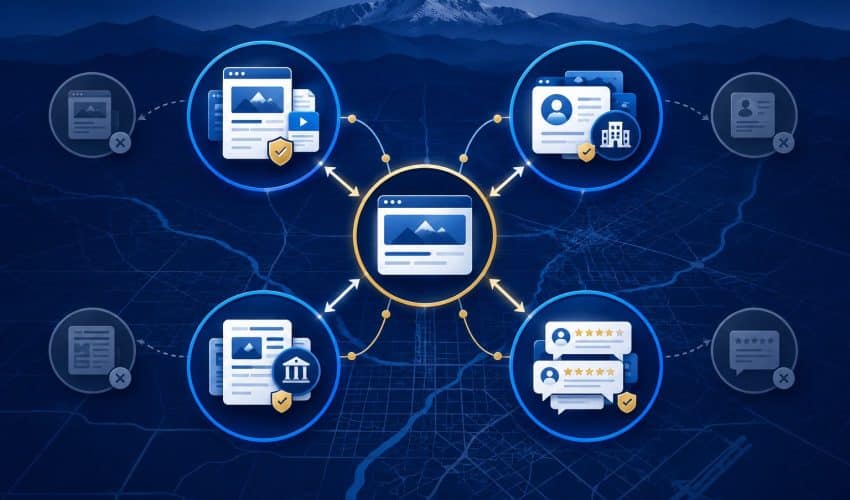
Before creating more profiles, map what already exists. Most businesses have accumulated years of partial listings, old biographies, former addresses, duplicate profiles, inconsistent service descriptions, expired credentials, and abandoned social accounts. Adding another layer without understanding the existing one usually multiplies the confusion.
Inventory first-party sources
Begin with the website and the facts it is supposed to establish:
- Legal and customer-facing business names
- Primary location, legitimate service areas, and contact information
- Services, products, specializations, and limitations
- Founding history and leadership
- Credentials, licenses, certifications, and professional affiliations
- Project experience, case studies, and documented outcomes
- Policies, processes, pricing context, and customer expectations
- Original research, tools, guides, and educational resources
The website should remain the clearest source of truth for information the business controls. Google’s current guidance for generative AI search still emphasizes foundational SEO, clear technical structure, valuable content, and accurate local-business information. Its Organization structured-data documentation also explains that organization markup can help Google understand administrative details and distinguish an organization in search results.
Structured data can clarify visible facts. It cannot rescue facts that are missing, inconsistent, or unsupported.
Inventory managed and independent sources
Search the business name, former names, address, phone numbers, founder or practitioner names, major services, and common brand variations. Then classify the sources you find.
- Search and map profiles
- Major and industry-specific directories
- Professional associations and licensing resources
- Chambers, community organizations, and nonprofit partners
- Manufacturer, supplier, franchise, and partner directories
- Review platforms
- Local and industry publications
- Podcasts, interviews, conference pages, and contributed articles
- Awards and recognition pages
- Public datasets and government records
- Social and professional profiles
Record the URL, source type, owner, last update, facts displayed, links, accessibility, and any conflicts. This creates a working source register, not a collection of bookmarks no one will revisit.
Keep the Business Identity Consistent Without Making It Robotic
Consistency means that material facts agree. It does not mean copying the same 250-word description into 100 directories.
The business name, address, phone number, website, hours, service model, leadership, credentials, and core services should not conflict across important sources. Descriptions can vary naturally according to the audience and platform.
Google’s guidelines for representing a business require the real-world business name, accurate address or service area, and a limited set of categories that describe the core business. Those rules are useful beyond one platform because they reinforce a basic principle: public profiles should describe the actual operation, not the version someone hopes an algorithm will reward.
Resolve high-impact conflicts first
Not every discrepancy deserves the same urgency. Prioritize conflicts that can misdirect customers or change how the business is understood:
- Old or incorrect phone numbers
- Closed, virtual, or former addresses shown as active locations
- Duplicate business profiles
- Former business names presented as current
- Incorrect website destinations
- Outdated leadership or practitioner information
- Expired licenses or credentials
- Services the business no longer provides
- Incorrect hours or service areas
- Conflicting founding dates or ownership claims
The relationship between entity signals versus page signals helps explain why this work matters. A strong page can describe a service well, but the wider public record may still leave the company’s identity, location, expertise, or relationship to that service unclear.
Build Independent Corroboration

Independent corroboration is evidence from a source the business does not fully control. It is valuable because it can verify a claim from outside the company’s own marketing system.
The strongest opportunities usually arise from real operations:
- Customers leave detailed reviews after legitimate experiences.
- Professional associations list active members or credentials.
- Manufacturers identify authorized installers or partners.
- Community organizations document sponsorships or participation.
- Journalists cover useful data, expert analysis, or noteworthy business activity.
- Industry publications accept substantive expert contributions.
- Award organizations publish finalists and winners.
- Podcasts and event pages document interviews and presentations.
- Government and licensing sources confirm registrations or qualifications.
These sources should be earned or maintained for legitimate reasons. Paying for hundreds of generic directory placements may create activity in a report, but volume alone does not establish meaningful authority.
Evaluate the source before pursuing it
Ask five questions:
- Is the source credible? Does it have a legitimate editorial, professional, regulatory, community, or customer purpose?
- Is it relevant? Does it relate to the industry, service, location, expertise, or customer decision?
- Is inclusion appropriate? Does the business genuinely qualify, or would the placement be manufactured?
- Is the information maintained? Can inaccurate details be corrected and ownership transferred when employees or agencies change?
- Will the source help a customer? Does it provide verification, context, comparison, or a useful path to the business?
The difference between source trust versus content quality is useful here. A credible domain does not automatically make every page useful, and excellent writing on an unknown or misleading source does not automatically make the source authoritative. Evaluate both the source and the specific evidence.
Create First-Party Evidence Worth Referencing
A business cannot force independent sources to cite it, but it can publish better material for those sources—and customers—to evaluate.
Document real work
Case studies should explain the initial situation, relevant constraints, work performed, evidence, outcome, timeframe, and limitations. They should not turn a convenient correlation into a guaranteed causal claim.
The Elite SEO Consulting case studies illustrate how project evidence can organize the problem, strategy, measured changes, and business context without assuming that every future campaign will reproduce the same result.
Publish original expertise
Useful source assets can include:
- Original research with a documented method
- Benchmark reports with clear sample limitations
- Technical explanations based on real implementation
- Calculators, checklists, and decision tools
- Local market analysis
- Transparent process guides
- Expert commentary connected to an identifiable author
- Original photographs, diagrams, and project documentation
- Definitions and comparisons that resolve recurring customer confusion
Google’s current generative AI guidance says valuable, non-commodity content is likely to matter more over time than attempts to create pages for every possible query variation. That is a useful standard. Publish something worth using, not merely another rearrangement of what ten competitors already said.
Make the evidence attributable
Show who created the material, why that person or organization is qualified, when it was published or materially updated, what sources were used, and where the limits are. Link author pages, organization details, related evidence, and relevant external sources where appropriate.
An anonymous article making strong claims is harder to evaluate than one tied to a verifiable person and organization.
Connect the Sources Without Trying to Script the Web
A source profile becomes more useful when its relationships are easy to follow. The website can link to legitimate profiles, credentials, associations, award pages, interviews, and supporting references. Independent sources can link back when editorially appropriate.
Organization and LocalBusiness structured data can clarify visible business information for Google. Appropriate sameAs references can identify profiles that represent the same organization. The markup should match the page and the real business. Schema is clarification, not a machine-readable permission slip to claim relationships that do not exist.
OpenAI’s publisher guidance explains that allowing OAI-SearchBot can help ChatGPT search discover and link to public content, while referral URLs can include utm_source=chatgpt.com for analytics. That access matters for first-party pages. It does not mean every managed profile or independent source will be retrieved, cited, or presented in the same way.
The correct approach is to maintain a coherent AI search visibility strategy that connects technical access, entity clarity, useful content, third-party evidence, measurement, and conversion.
Audit the Source Profile for Gaps and Conflicts
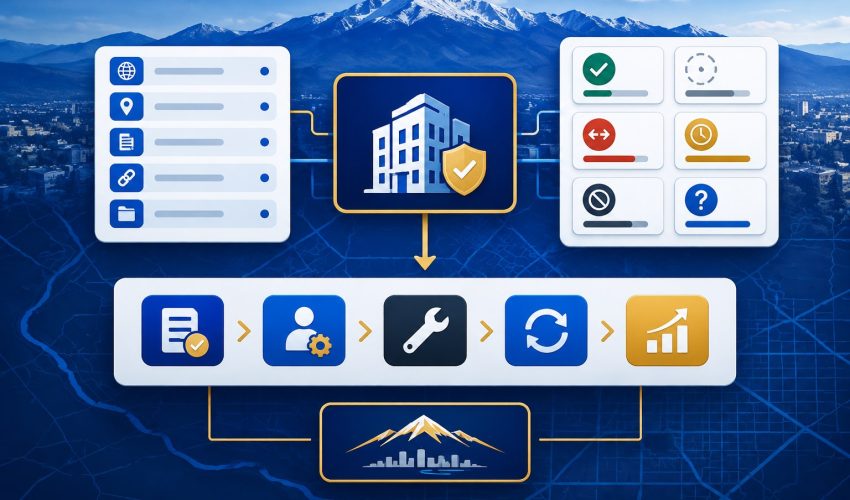
A source-profile audit should produce decisions, not merely a longer spreadsheet.
- Define the facts that matter. List the business identity, services, locations, leadership, credentials, proof, and limitations customers need to verify.
- Inventory the sources. Record owned pages, managed profiles, and independent evidence.
- Check accessibility. Confirm that important pages load publicly and can be discovered through links or search.
- Compare material facts. Flag conflicts involving names, addresses, contact details, services, locations, leadership, and credentials.
- Map claim support. Identify which important claims have first-party evidence, independent corroboration, both, or neither.
- Compare competitors. Use an AI citation-gap analysis to find recurring source and evidence patterns across controlled customer questions.
- Prioritize corrections and opportunities. Focus on gaps closest to qualified visibility, customer trust, and revenue.
- Assign ownership. Decide who maintains each profile, responds to reviews, updates credentials, and monitors changes.
- Retest. Track whether important facts become easier to retrieve and whether visibility contributes to useful business outcomes.
Use a source register
| Field | Purpose |
|---|---|
| Source and URL | Identifies the exact asset or profile |
| Source type | Separates owned, managed, independent, and customer evidence |
| Facts and claims | Shows what the source verifies |
| Owner and access | Prevents abandoned profiles and lost credentials |
| Last verified | Creates a maintenance schedule |
| Conflict status | Flags material inconsistencies |
| Business priority | Connects the source to services, markets, trust, and revenue |
Review high-priority sources after major business changes and on a recurring schedule. Ownership changes, relocations, acquisitions, rebranding, new services, lost credentials, and closed locations should trigger immediate review.
Measure Source-Profile Performance in Layers
A strong source profile should be evaluated across several outcomes:
- Accuracy: Are important facts correct across priority sources?
- Coverage: Are the business’s relevant services, locations, credentials, and evidence represented?
- Corroboration: Which claims are confirmed independently?
- Discovery: Are priority sources indexed, retrievable, and appearing for relevant searches?
- AI visibility: Which sources receive mentions or citations across controlled tests?
- Referral activity: Do identifiable search, directory, media, or AI sources send useful visits?
- Conversion: Do those visits produce calls, forms, qualified leads, customers, or revenue?
No single metric represents the entire system. More directory listings do not automatically mean stronger authority. More citations do not automatically mean more leads. Measurement should preserve the path from source visibility to business outcome.
Common AI Source-Profile Mistakes
Buying citation volume instead of earning relevance
A package of generic listings may increase the count in a report without improving the evidence customers or AI-search systems can use.
Creating profiles the business cannot maintain
An abandoned profile becomes tomorrow’s conflicting source. Create or claim profiles only where there is a legitimate purpose and an owner.
Using inconsistent promotional claims
Changing the founding date, service footprint, team size, or credentials to fit each platform damages clarity. Marketing language may vary. Facts should not.
Treating structured data as evidence
Markup can describe a real fact or relationship. It does not independently prove the claim.
Trying to manufacture notability
Self-published profiles, paid mentions disguised as editorial coverage, fake awards, and manipulated reviews are not a sustainable authority strategy.
Ignoring conversion after visibility improves
A customer who finds the business still needs accurate contact information, credible proof, a clear offer, and an appropriate next step.
Frequently Asked Questions
What is an AI-ready source profile?
It is the connected set of accessible first-party and third-party sources that clearly and accurately describe a business, its people, services, locations, qualifications, evidence, and reputation.
Does a business need hundreds of citations?
No. Accuracy, relevance, credibility, and maintenance generally matter more than raw volume. Prioritize sources that help customers or legitimately verify the business.
Can structured data make an AI system trust a business?
Structured data can clarify visible information and relationships, but it does not manufacture trust or prove unsupported claims. The markup should match the page and the real-world business.
Should a company create a Wikipedia page for AI visibility?
Not unless the subject independently qualifies under Wikipedia’s rules and reliable independent sources already support the article. Wikipedia is not a promotional business directory, and attempting to manufacture notability can create reputational problems.
How often should a source profile be audited?
Review high-priority sources on a recurring schedule and after material business changes such as relocation, rebranding, new ownership, new services, leadership changes, or expired credentials.
Build a Public Record Customers Can Verify
An AI-ready source profile is not a directory campaign with newer terminology. It is a disciplined public record connecting accurate business facts, useful first-party evidence, and legitimate independent corroboration.
Elite SEO Consulting helps businesses identify conflicting sources, missing evidence, authority gaps, technical barriers, and measurement opportunities across search and AI-assisted discovery.
Contact Elite SEO Consulting or call 719-474-9404 to evaluate whether your business is easy to identify, verify, and choose beyond its own website.


